|
High-Quality Weight Loss: Why Preserving Muscle Matters
The scale only tells part of the story. Let's talk about what you're actually losing.

From the desk of Meg Sharp, MSc, Health & Fitness Consultant, Cambridge Group of Clubs
Many people seek to lose weight in pursuit of better health, improved performance, or changes in appearance. But one vital variable, irrespective of the weight-loss method, is often overlooked: the quality of the weight lost.
What is High-Quality Weight Loss?
“High-quality weight loss” essentially refers to weight loss whereby muscle is preserved as much as possible. This translates to maintenance of strength, power, agility, energy, mental acuity, and physical self-confidence. It also preserves bone and metabolic health to a much greater degree than when fat and muscle are lost in equal parts.

We too often define a weight loss protocol as successful simply because a meaningful amount of weight was lost. This misses the mark: we must also account for how much of the weight was fat and how much was muscle.
Why Preserving Muscle During Weight Loss Matters
Skeletal muscle does more than move our bodies: it plays a central role in glucose disposal, insulin sensitivity, resting energy expenditure, and overall metabolic resilience. These variables are particularly important as we age and for those living with chronic disease.

Just as importantly, maintaining muscle during weight loss vastly increases the odds of keeping the weight off.
GLP-1 Medications, Weight Loss, and Muscle
The rise in research on GLP-1 induced weight loss is encouraging a more careful exploration of what type of tissue is being lost during caloric restriction. Likely motivated by the observations that many stop taking the drug within two years, that the overwhelming majority regain all the weight within 2 years of drug cessation and most of the rebound weight is fat. This pattern holds true when people lose through dietary restriction alone (without the support of pharmaceuticals).
Let me say this another way: The majority of people who lose weight regain it, ultimately ending up with more body fat and less lean tissue. They may emerge from the weight-loss journey more frail and less metabolically healthy than when they began.
Your Weight Does Not Tell the Whole Story
Another vital perspective: Your weight alone does not give you an accurate lens in terms of your overall health. How much muscle you have is a huge determinant of energy, vitality, metabolic health, and quality of life.
How to Lose Fat While Preserving Muscle
What we’ve known for decades, and should be shouting from the rooftops, is when you exercise daily, strength train regularly, and prioritize foods that are high in protein and fibre, you lose more fat weight, maintain more lean tissue, and are significantly more likely to keep the weight off over the long term. This shouldn’t be surprising as the maintenance of lean tissue effectively maintains metabolism, energy, ability, and physical self-confidence. Moreover, adequate protein intake and strength training are considered muscle-sparing practices. In a state of caloric restriction, where the body must “burn” stored energy from within, these habits encourage the body to preserve lean tissue while drawing more heavily on fat stores.
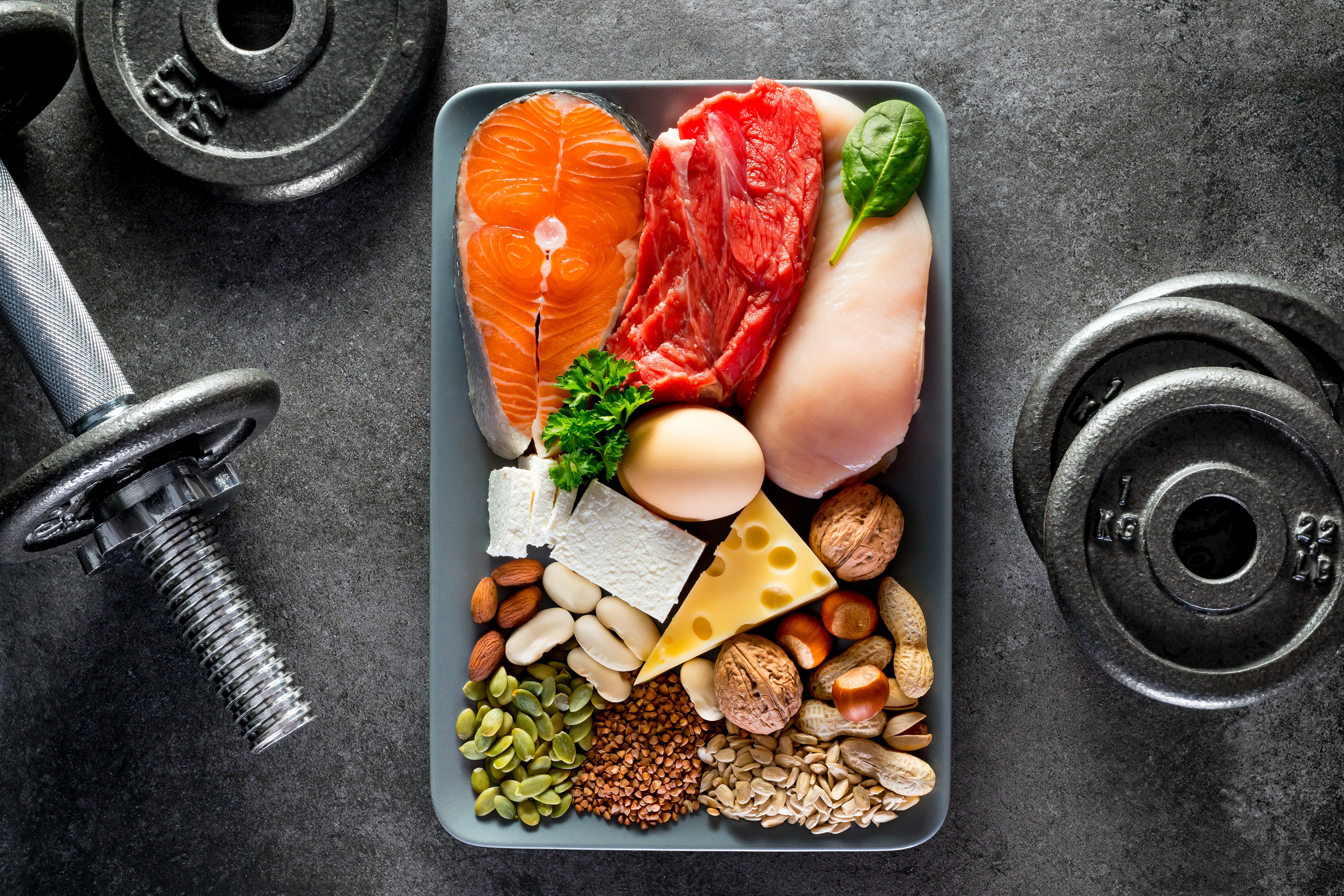
Meg's Recommendations for Healthy, Sustainable Weight Loss
Our recommendations for optimal metabolic and overall health and vitality:
- Eat: 20-40g of high-quality protein per meal, 3-6 times per day
- Eat: high fibre foods including fresh fruit and vegetables, beans, pulses, nuts, and seeds
- Avoid highly processed foods
- Move daily. Ideally in a manner you enjoy that fits into your schedule. Bonus points if the movement is occasionally intense (i.e. very challenging).
- LIFT. Compound movements, using weight that is heavy enough to challenge you within 5-12 repetitions while keeping strong, safe form. 2+ times per week. Aim for 90+ minutes of lifting every week. This can be accumulated over multiple days (for example, lift 21-25 minutes, 4 days a week).
If you would like a hand adjusting your exercise or nutrition to protect your muscle, improve your strength, and support sustainable weight loss, we would love to help. Connect with Lauren and the Adelaide Club team to arrange a complimentary consultation.
References:
Bellicha A, van Baak MA, Battista F, et al. Effect of exercise training on weight loss, body composition changes, and weight maintenance in adults with overweight or obesity: An overview of 12 systematic reviews and 149 studies. Obes Rev. 2021;22 Suppl 4(Suppl 4):e13256. doi:10.1111/obr.13256
Berg S, Stickle H, Rose SJ, Nemec EC. Discontinuing glucagon-like peptide-1 receptor agonists and body habitus: A systematic review and meta-analysis. Obes Rev. 2025 Aug;26(8):e13929. doi: 10.1111/obr.13929. Epub 2025 Apr 4. PMID: 40186344.
Jensen SBK, Fiorenza M, Juhl CR, et al. Physical Fitness with Exercise and GLP-1 Receptor Agonist Treatment Alone or Combined After Diet-Induced Weight Loss: A Secondary Analysis of a Randomized Controlled Trial in Adults with Obesity. Sports Med. 2026;56(7):1785-1800. doi:10.1007/s40279-025-02386-0
Sancho-Haro, E., Muñoz-López, M., Baz-Valle, E., Villanueva-Tobaldo, C. V., Tornero-Aguilera, J. F., López-Gil, J. F., López-Moreno, M., Martín-Rodríguez, A., & Clemente-Suárez, V. J. (2026). Optimizing Weight Loss in the GLP-1 Era: Preserving Muscle Mass, Function and Metabolic Health Through Precision Nutrition and Resistance Training. Pharmaceuticals, 19(6), 897. https://doi.org/10.3390/ph19060897
Quimbayo-Cifuentes AF. Weight Regain After GLP-1-Based Therapy Discontinuation: Failure, Physiology, or Follow-Up Gap. Cureus. 2026;18(2):e104259. Published 2026 Feb 25. doi:10.7759/cureus.104259